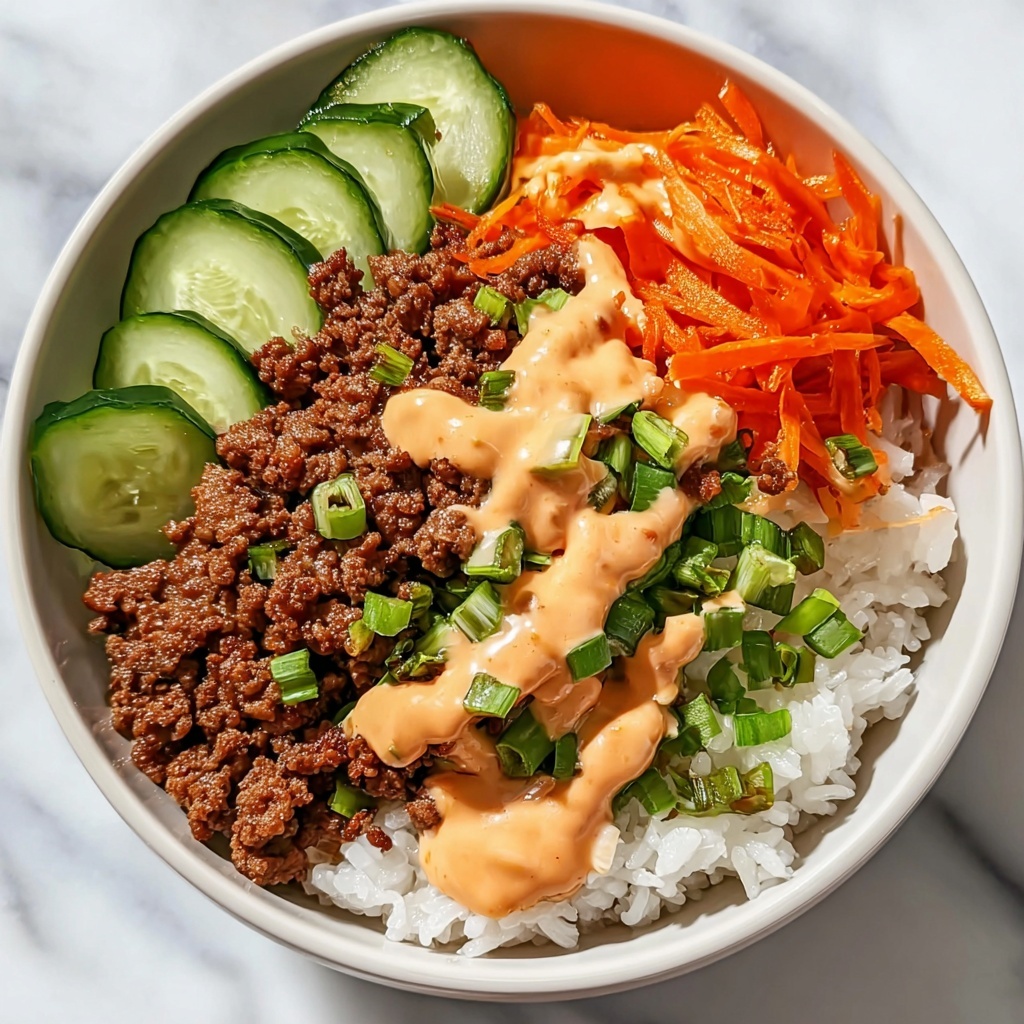
If you are craving a dish that bursts with flavor, color, and that irresistible umami punch, then this Korean Beef Rice Bowls Recipe is exactly what you need. It brings together tender, savory minced beef glazed with a sweet-spicy sauce, vibrant fresh vegetables, and creamy mayo, all layered over fragrant jasmine rice. Every bite feels like a warm hug, balancing heat, sweetness, and freshness in a way that feels both comforting and exciting. Once you try this recipe, it will quickly become one of your go-to meals for weeknights or casual gatherings.
Ingredients You’ll Need
This Korean Beef Rice Bowls Recipe uses straightforward, pantry-friendly ingredients that each play a vital role in creating the dish’s rich, layered flavors. From the aromatic garlic and ginger to the spicy depth of gochujang and the nuttiness of sesame oil, every ingredient adds character and texture.
- Freshly grated garlic (1 tsp): Adds a sharp, aromatic foundation that wakes up the meat.
- Freshly grated ginger (1 tsp): Brings a subtle zing and warmth balancing the richness.
- All-purpose soy sauce (3 tbsp): Provides a savory umami note critical for authentic flavor.
- Brown sugar (2 tbsp): Sweetens the sauce and helps caramelize the beef beautifully.
- Sesame oil (1 tbsp): Imparts a toasty, nutty aroma unique to Korean cooking.
- Gochujang (1 tbsp): A fermented chili paste that delivers a perfect sweet-spicy kick.
- Rice vinegar (1 tsp): Adds a mild tang that brightens the sauce.
- Sesame seeds (1 tbsp + extra): For texture and a bit of crunch with every bite.
- Extra-virgin olive oil or neutral oil (2 tbsp): Helps cook the beef evenly and keeps it juicy.
- Minced (ground) beef (500 g / 1 lb 2 oz): The hearty protein filling the bowls with richness.
- Spring onions (2, finely sliced): Bring a fresh, mild onion flavor and nice color contrast.
- Whole-egg mayonnaise (3 tbsp): Creates a creamy, cooling sauce component for balance.
- Additional gochujang, sesame oil, rice vinegar for mayo (1 tsp, ½ tsp, ½ tsp): These ingredients give the mayo a punch of flavor and cohesion with the beef.
- Cooked jasmine rice (2 cups / 370 g): A fluffy, fragrant base that holds all the delicious components.
- Kimchi (1 cup / 240 g): Adds fermented tang, spice, and crunch for authenticity.
- Carrot (1, julienned): Bright, fresh sweetness and a crisp bite.
- Lebanese cucumber (1, sliced into half moons): Light, refreshing texture to lighten each spoonful.
How to Make Korean Beef Rice Bowls Recipe
Step 1: Prepare the Beef Mixture
Start by heating the oil in a large pan over medium-high heat, then add the minced garlic and ginger. These aromatics will infuse the oil and set a flavorful base. Once fragrant, add the ground beef, breaking it up as it cooks until it is browned and crumbly. This step is crucial because the beef will soak up all the sauce flavors perfectly when added next.
Step 2: Create the Sauce
Mix together the soy sauce, brown sugar, sesame oil, gochujang, and rice vinegar in a small bowl. Pour this over the browned beef, stirring to coat evenly. Let it simmer briefly so the sauce thickens and caramelizes slightly, coating each morsel of beef with that delicious sweet and spicy glaze.
Step 3: Prepare the Spicy Mayo
While the beef cooks, combine mayonnaise with a teaspoon of gochujang, half a teaspoon of sesame oil, and half a teaspoon of rice vinegar. This creamy sauce adds a cooling contrast to the heat of the beef and gives the bowls a luscious texture boost.
Step 4: Assemble the Bowls
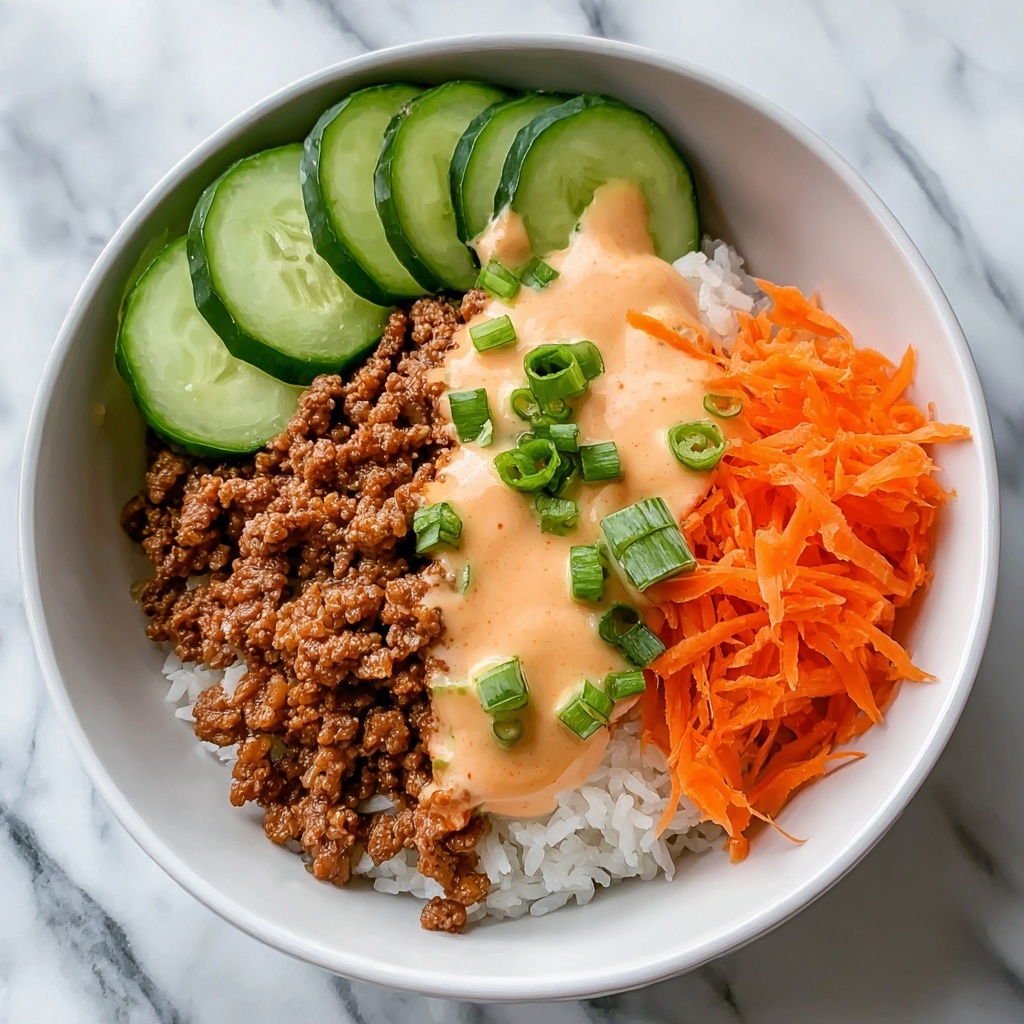
To build your Korean Beef Rice Bowls Recipe, spoon warm cooked jasmine rice into each bowl, topping with a generous amount of the beef mixture. Add colorful piles of kimchi, julienned carrot, and cucumber slices on the side. Drizzle the spicy mayo over the top and finish with a sprinkle of sesame seeds and spring onion for extra flavor and inviting presentation.
How to Serve Korean Beef Rice Bowls Recipe
Garnishes
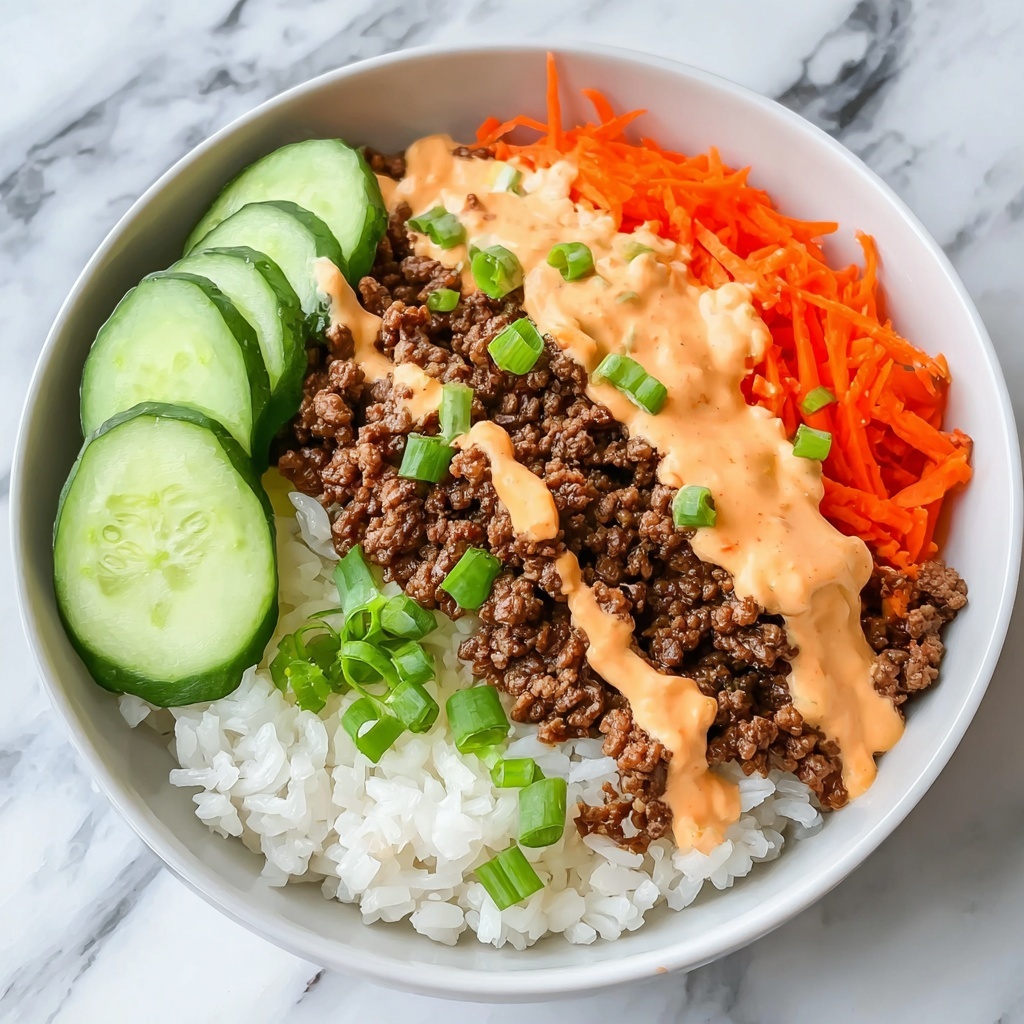
Garnishes bring your bowls to life! Sprinkling toasted sesame seeds on top adds crunch and nuttiness. Reserved finely sliced spring onions brighten the dish visually and with a mild oniony bite. A few extra dots of spicy mayo can elevate every mouthful with its creamy texture and savory flavor.
Side Dishes
Serve these bowls alongside crisp cucumber kimchi or a light miso soup for a refreshing balance. A simple steamed vegetable such as broccoli or bok choy works well if you want to add a green element without overwhelming the main dish. For a heartier meal, pairing with fried dumplings or Korean pancakes is a delightful option.
Creative Ways to Present
Try layering the ingredients in clear glass bowls to showcase the vibrant colors: white rice at the bottom, followed by sections of beef, kimchi, and fresh veggies. Or use lettuce cups for a low-carb twist, letting guests build their own Korean Beef Rice Bowls Recipe bites. You can even turn it into a Korean-inspired burrito wrap using large steamed tortillas for a fun handheld meal.
Make Ahead and Storage
Storing Leftovers
This Korean Beef Rice Bowls Recipe keeps well in an airtight container in the refrigerator for up to 3 days. Keep the cooked beef and rice together, but store fresh vegetables and spicy mayo separately to preserve their texture and flavor.
Freezing
You can freeze the cooked beef mixture for up to 2 months. Make sure to cool it completely before putting it into freezer-safe bags or containers. However, fresh veggies and spicy mayo do not freeze well, so add those fresh when reheating.
Reheating
To reheat, warm the frozen or refrigerated beef and rice in a microwave or on the stovetop until hot. Add fresh kimchi, cucumber, carrot, and a drizzle of spicy mayo just before serving to keep the dish vibrant and crisp.
FAQs
Can I substitute ground beef with another protein?
Absolutely! Ground pork, chicken, or turkey all work well and absorb the Korean sauce beautifully. For a vegetarian option, try crumbled firm tofu or mushrooms with the same seasonings for a delicious twist.
Is gochujang very spicy?
Gochujang has a mild to medium heat level along with sweetness and depth. If you’re sensitive to spice, start with less and adjust to your taste. You can also substitute with a blend of miso paste and chili flakes for a gentler flavor.
Can I make this recipe gluten-free?
Yes! Use gluten-free tamari or a certified gluten-free soy sauce in place of regular soy sauce, and double-check the gochujang label as some brands may contain gluten. This swap keeps all the amazing flavors intact.
What type of rice is best for Korean Beef Rice Bowls Recipe?
Jasmine rice is perfect because it’s fragrant and fluffy, absorbing the beef sauce wonderfully. Short-grain rice or sushi rice are great alternatives that offer a slightly stickier texture traditional in Korean cuisine.
Can I prepare this recipe ahead of time for meal prep?
Yes! The beef mixture can be made in advance and stored in the fridge for up to 3 days. Keep fresh veggies and spicy mayo separate until serving to maintain freshness and texture. This makes for a quick, satisfying meal any day of the week.
Final Thoughts
I genuinely hope you give this Korean Beef Rice Bowls Recipe a try because it really is a crowd-pleaser that tastes much more complex than the time it takes to make it. It’s friendly enough for weeknights but impressive enough to serve when friends drop by. Once you get a taste of that sweet-savory beef paired with fresh crisp veggies and creamy spicy mayo over warm rice, you’ll be dreaming of it all week long. Happy cooking and enjoy every delicious bite!
Print
Korean Beef Rice Bowls Recipe
- Prep Time: 10 minutes
- Cook Time: 10 minutes
- Total Time: 20 minutes
- Yield: 4 servings
- Category: Main Course
- Method: Stovetop
- Cuisine: Korean
Description
This Korean Beef Rice Bowls recipe delivers a deliciously savory and slightly spicy meal featuring ground beef marinated in traditional Korean flavors like garlic, ginger, gochujang, and sesame oil. Served over fragrant jasmine rice with crisp vegetables, kimchi, and a rich gochujang mayonnaise, it’s perfect for a quick and satisfying dinner in just 20 minutes.
Ingredients
Beef Marinade
- 1 tsp freshly grated garlic
- 1 tsp freshly grated ginger
- 3 tbsp all-purpose soy sauce
- 2 tbsp brown sugar
- 1 tbsp sesame oil
- 1 tbsp gochujang (adjust for spice preference)
- 1 tsp rice vinegar
- 1 tbsp sesame seeds, plus extra to garnish
Beef and Cooking
- 2 tbsp extra-virgin olive oil or neutral oil
- 500 g (1 lb 2 oz) minced (ground) beef
- 2 spring onions (scallions), finely sliced (1 tbsp reserved for garnish)
Gochujang Mayonnaise
- 3 tbsp whole-egg mayonnaise
- 1 tsp gochujang
- ½ tsp sesame oil
- ½ tsp rice vinegar
To Serve
- 2 cups (370 g) cooked jasmine rice
- 1 cup (240 g) kimchi
- 1 carrot, julienned
- 1 Lebanese (short) cucumber, sliced into half moons
Instructions
- Prepare the Beef Marinade: In a bowl, combine freshly grated garlic, grated ginger, soy sauce, brown sugar, sesame oil, gochujang, rice vinegar, and sesame seeds. Mix well until the sugar is dissolved and ingredients are fully incorporated.
- Cook the Beef: Heat the extra-virgin olive oil or neutral oil in a large skillet over medium-high heat. Add the minced beef and cook for about 5-7 minutes, breaking it up with a spatula until browned and cooked through.
- Add the Marinade and Spring Onions: Pour the marinade over the cooked beef and stir to coat evenly. Add the finely sliced spring onions (reserve 1 tbsp for garnish) and cook together for another 1-2 minutes until the beef is glossy and the flavors meld.
- Make the Gochujang Mayonnaise: In a small bowl, mix the whole-egg mayonnaise with gochujang, sesame oil, and rice vinegar until smooth to create a spicy, tangy sauce.
- Assemble the Bowls: Divide the cooked jasmine rice between four bowls. Top each with the marinated Korean beef, a portion of kimchi, julienned carrot, and sliced cucumber.
- Garnish and Serve: Drizzle the gochujang mayonnaise over the bowls, sprinkle with sesame seeds and the reserved spring onions. Serve immediately for a flavorful and balanced meal.
Notes
- You can adjust the amount of gochujang depending on your preferred spice level. If you prefer a milder option, substitute gochujang with a mix of mild chili paste or even sweet paprika.
- For added nutrition, feel free to add steamed or sautéed greens such as spinach or bok choy.
- This recipe is easy to double or halve depending on serving needs.
- Leftovers can be refrigerated in an airtight container for up to 2 days; reheat thoroughly before serving.